
Stucco Moisture Problems: The Interior Signs Homeowners Miss
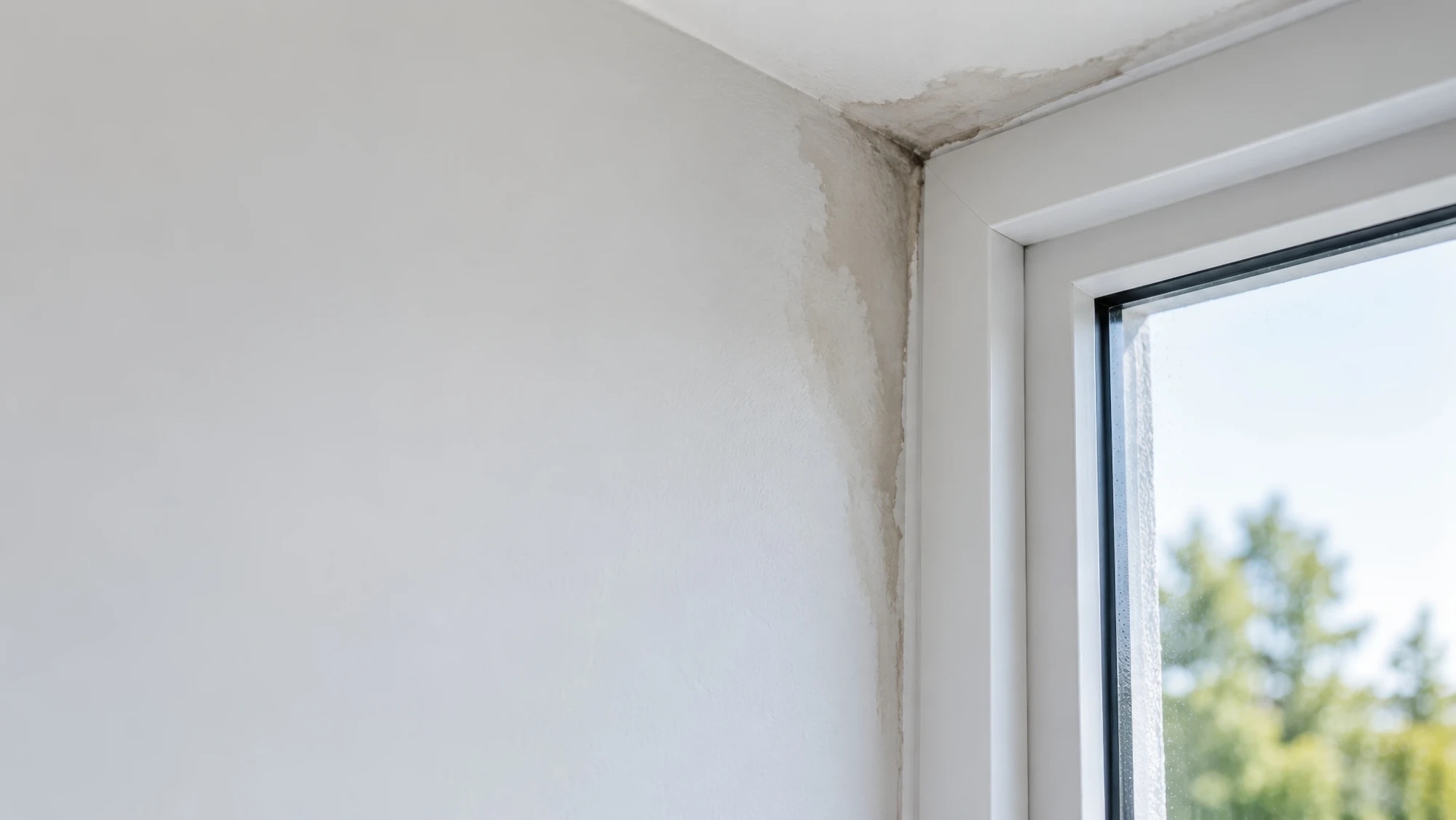
The corner of the dining room is a little musty. You spy a tan stain on the drywall, where the paint has bubbled. Your spouse offers that it’s just condensation. Perhaps. But on a stucco house, a stain under a window is one of the most common interior signs of stucco moisture problems. Water slips in at the edges of the window, runs down behind the stucco, and eventually shows up inside.
Condensation is a reasonable answer. Sometimes it’s the right one, sometimes not. But a few minutes outside with a flashlight can give you a more accurate picture of what’s going on.
Why Stucco Moisture Problems Hide Behind the Wall
Stucco is porous. It soaks up some water every time it rains. If it’s built properly, it’ll drain that water. You’d be surprised at how many stucco issues stem from improper drainage.
When this happens, water sits against the sheathing and framing behind the stucco. The usual entry points include:
- Windows and doors, especially at the corners and sills
- Spots where a roof meets a stucco wall without kick-out flashing
- Deck ledger boards
- Seams where stucco meets another material
Our buyer’s guide to stucco inspections covers all of these issues in more detail.
Common Signs of Stucco Moisture Damage Inside Your Home
Stucco moisture damage tends to appear in the same few places. Walk the rooms along your exterior walls and check the following spots.
Under and beside windows
- Tan or brown stains on the drywall below the sill
- Paint that bubbles, peels, or cracks near the window corners
- A sill or trim piece that feels soft or looks darker than the rest
Baseboards and floors on exterior walls
- Baseboards that swell, stain, or pull away from the wall
- Caulk separating along the top of the baseboard
- Carpet that feels damp along the edge
Corners and closets
- A moldy smell with no visible source. That smell can mean mold is growing somewhere you can’t see. The EPA’s guide to mold and moisture has more on hidden mold.
- Dark spots low on the wall or behind stored boxes
Drywall
- Soft spots that give when you press
- Bulging, or seams showing through the paint
Ceilings near a lower roof
- Stains on a ceiling or upper wall where a lower roof meets a stucco wall, which is where kick-out flashing belongs
Pro Tip: After the next hard, windy rain, take timestamped photos of the spot. Watch whether it darkens, spreads, or stays the same.
Is It the Stucco, or Something Else?
Not every stain comes from the stucco. Before anyone opens a wall, it helps to rule out the other common causes:
| What you see… | Points toward stucco if… | Could also be… |
|---|---|---|
| Stain under a window | It shows up or grows after wind-driven rain | Condensation running off cold glass on winter mornings |
| Ceiling stain | It sits below a spot where a roof meets a stucco wall | A roof leak or a plumbing line above |
| Stain near a bathroom or kitchen | It’s on an exterior wall and changes with the weather | A leaking drain, supply line, or tub surround |
| Musty corner | It’s on an exterior wall and lingers after storms | High indoor humidity |
Condensation on windows and walls usually points to high indoor humidity. A simple rule of thumb: a stain that tracks with rain points outside. A stain that tracks with showers, cooking, or cold mornings points inside.
How to Check for Moisture Behind Stucco
You can gather clues on your own, but confirming moisture behind stucco ultimately requires testing.
What you can safely do
- Go outside and look at the same wall. Check for cracks or staining below the window corners, cracked or missing caulk, and stucco that runs down into the soil or mulch.
- Look up. Where a roof meets the wall, there should be a small angled piece of flashing, called a kick-out, steering water away from the stucco.
- Press the window trim, inside and out. Be on the lookout for soft wood, and make a note of where the spot is.
- Note which storms bring the stain back.
What a professional does
Non-invasive scans and infrared cameras can flag suspect areas, but they can’t confirm water inside the wall. Invasive probe testing is the most reliable way to know. Small holes are drilled at likely entry points, a probe reads the moisture in the sheathing behind the stucco, and the holes are sealed afterward. Our guide to stucco inspections explains how those readings get interpreted.
What to skip
- Hardware-store moisture meters. Surface scanners can’t read reliably through stucco and the metal lath behind it.
- Cutting into drywall yourself. If you’d rather not figure out how to check for moisture behind stucco on your own, leave it to us. Our OSHA 30-certified crews know where to look and how to open a wall safely.
Stucco Moisture Repair vs. Remediation
Once testing shows where the water is, we’ll be able to tell you if you need repair or remediation:
- Repair. Resealing around windows, adding or fixing flashing, and patching a limited section of stucco. This fits isolated wet readings with sound wood behind them.
- Remediation. Removing stucco from the affected walls, replacing damaged sheathing, and installing a new stucco system that drains properly. This fits widespread moisture or soft, deteriorated sheathing.
Testing decides which one you need. A small stain can sit on top of a big problem. The reverse is true, too.
Avoid painting over the stain. Paint covers the clue, but the water stays there. The stain may fade, but the water’s still finding its way in.
Not sure who to trust with the work? Start with our list of questions to ask a stucco contractor, and read up on other common stucco issues that call for a repair contractor. You can also check out the stucco repair and re-stucco work we do.
Stucco Moisture FAQ
Can stucco moisture problems cause mold? Mold needs moisture, and a wet wall cavity can provide it. The sooner the water source is found and fixed and the wall is dried out, the less chance mold has to take hold.
Will stucco moisture problems go away once the wall dries out? Usually not. If water got in once, the path is still there, and the next storm can soak the wall again.
Does homeowners insurance cover stucco moisture repair? It depends on your policy. Many policies treat slow, long-term leaks differently from sudden damage. Read yours and talk with your agent.
Catch It While It’s Still Just a Stain
Robey Stucco is a family-owned company with more than 30 years of stucco, EIFS, and stone veneer work across Maryland, Pennsylvania, Virginia, and West Virginia. Diagnosing moisture intrusion is a big part of what we do. Here’s how to set it up:
- Reach out. Call or send a quick note about what you’re seeing. Photos help.
- We take a look. A Robey pro checks the wall inside and out.
- You get a plain answer. Repair, remediation, or nothing to worry about, along with a clear next step.
Or call: MD 410-751-7788 | PA 717-677-1495